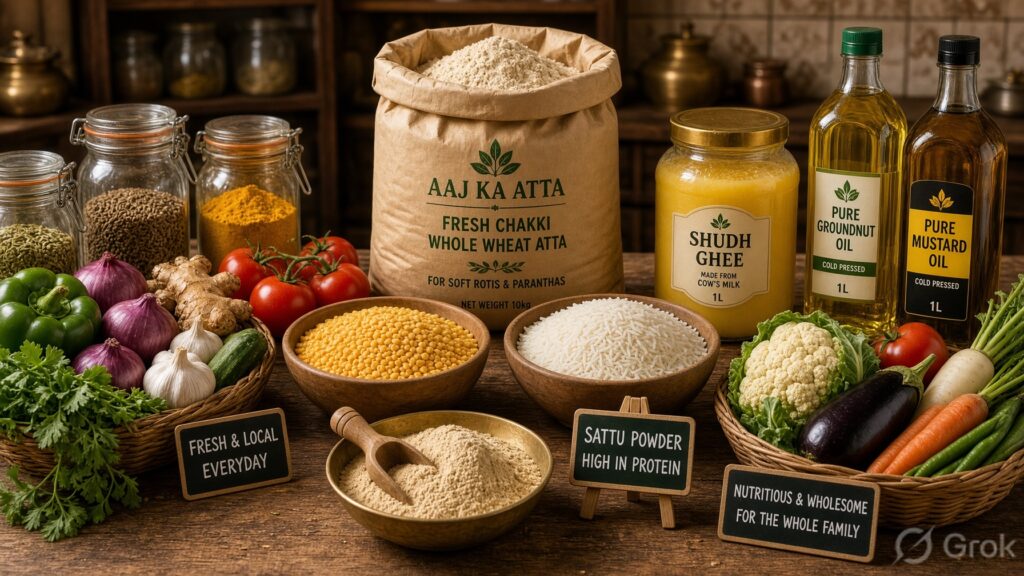

If you live in Nalasopara West and your family eats roti, chapati, paratha or puri regularly, atta is not an occasional grocery item—it is one of the foundations of the kitchen. That is why choosing flour only by looking at a packet name or a discount can be a mistake. Wheat quality, grinding, freshness, storage, texture and the way the flour behaves while kneading all affect the everyday cooking experience.
Shree Kiran Kitchen is based in Sai City, Hanuman Nagar, Nalasopara West and offers a range of flours and grain-based staples. This guide explains what local families can check before buying fresh atta, how to store it in Mumbai weather, how chakki flour differs in practical use, and how to choose the quantity that suits your household.
What Does “Fresh Chakki Atta” Mean?
Chakki atta is wheat flour produced by grinding wheat through a flour mill or chakki. In everyday shopping, the word “fresh” usually refers to flour that has been milled and packed relatively recently. Freshness does not automatically make every flour better, but it is one useful factor to consider together with grain quality, hygiene, storage and packaging.
Different mills can produce different textures. Some families prefer a finer atta, while others prefer a slightly more textured flour. The best choice is the one that works well for the foods your household actually prepares.
Why Wheat Quality Matters
Atta begins with the grain. The appearance, cleanliness, variety and condition of wheat all influence the final flour. When possible, look for sellers who clearly describe the wheat or product rather than relying only on vague words such as “premium.”
Shree Kiran Kitchen currently lists Wheat Atta, Chakki Fresh Atta, Multigrain Atta and several other flours, giving customers different options depending on their cooking preferences.
How to Choose Atta for Everyday Rotis
- Look for a flour texture your family finds easy to knead and roll.
- Choose a quantity that you can finish within a reasonable period.
- Check that the flour is packed cleanly and protected from moisture.
- Read the product name and ingredients rather than assuming all atta is identical.
- Try a smaller pack first when switching to a new flour or grain blend.
Soft rotis depend on more than the atta itself. Water quantity, kneading technique, resting time, rolling and cooking temperature all matter. If a roti becomes hard, changing the flour may help, but first check whether the dough is too dry, has not rested enough or is being cooked for too long.
Fresh Atta vs Long-Stored Flour
Flour quality can change with storage conditions. Heat, humidity, air exposure and moisture can affect aroma, texture and shelf life. In a coastal city such as Mumbai, good storage practices become particularly important during humid months.
This is one reason some households prefer buying practical quantities more frequently rather than storing very large amounts for long periods.
How Much Atta Should a Family Buy?
There is no universal monthly quantity because households eat differently. A family that prepares wheat-based meals twice a day may use considerably more atta than a family that alternates between rice, poha, idli, dosa and other foods.
A simple method is to track your consumption for two to four weeks. Note the amount you start with and how much remains. After a few cycles, you will know whether a smaller or larger pack makes sense for your home.
How to Store Atta in Nalasopara and Mumbai Weather
- Use a clean, dry, food-grade airtight container.
- Keep the container away from a wet sink or damp wall.
- Do not place flour in direct sunlight.
- Always use a dry scoop.
- Close the container immediately after use.
- Clean and fully dry the container before refilling it.
If you notice an unusual smell, insects, visible moisture or any other sign that the flour has deteriorated, it is safer not to use it.
What Can You Make with Wheat Atta?
Wheat atta is one of the most versatile staples in an Indian kitchen. It can be used for roti, chapati, paratha, puri, thepla and many other household recipes. Some homes also use wheat flour in snacks, baked preparations and traditional sweets.
Why Local Shopping Can Be Convenient
For customers around Nalasopara West, local shopping can make it easier to ask about stock, pack sizes, delivery and product availability. Shree Kiran Kitchen’s location in Hanuman Nagar also makes the brand locally relevant for residents searching online for atta and grain products near Nalasopara.
Other Flours Worth Exploring
Once your regular wheat requirement is sorted, you may also want to explore other flours according to your family’s recipes. The current Shree Kiran Kitchen flour category includes Multigrain Atta, Bajra Flour, Jowar Flour, Ragi Flour, Makka Atta, Rice Flour, Besan, Sattu, Suji and more.
These products are not interchangeable, so choose based on the dish you plan to prepare and the dietary preferences of your household.
Buying Atta Online from Nalasopara
Before placing an online order, check the product name, pack size, price, stock status and delivery availability. If you are ordering from Nalasopara East, Vasai, Virar or another Mumbai location, confirm serviceability for your exact address rather than assuming every pin code has the same delivery conditions.
Final Buying Checklist
- Do I know what type of atta I am buying?
- Is the pack size suitable for my household?
- Do I have clean, dry storage space?
- Have I checked current price and stock?
- Have I confirmed delivery for my address if ordering online?
- Am I choosing flour based on actual cooking needs rather than marketing claims?
Frequently Asked Questions
Where can I buy fresh chakki atta in Nalasopara West?
You can explore the flour range on Shree Kiran Kitchen’s website or check availability at its Nalasopara West location in Sai City, Hanuman Nagar.
Is chakki atta suitable for everyday roti?
Chakki wheat atta is commonly used for everyday roti and chapati. The final result also depends on dough preparation and cooking technique.
How should I store atta during Mumbai monsoon?
Keep it sealed in a dry, airtight food-grade container, away from moisture and damp areas. Always use a dry scoop.
Does Shree Kiran Kitchen have more than wheat atta?
Yes. Its current flour category lists multiple options including Chakki Fresh Atta, Multigrain Atta, Bajra, Jowar, Ragi, Makka, Rice Flour, Sattu and other products.
Can I order from outside Nalasopara West?
Check current delivery serviceability for your exact address in Nalasopara, Vasai, Virar or other Mumbai locations before placing the order.
Explore Atta and Grains at Shree Kiran Kitchen
If you are building a practical monthly pantry, start with the staples your family uses most. Explore the current atta and flour range at Shree Kiran Kitchen and choose products based on your cooking style, pack-size needs and delivery location.